Kung Fu and its various styles

“When you are learning about martial art, it is about respect.”
Kung Fu (功夫), a term often used to describe Chinese martial arts, encompasses a wide range of styles and schools, each with its unique characteristics, philosophies, techniques, and training methods. These styles can broadly be categorized into external (硬派) and internal (软派) styles, although the distinction can sometimes be blurred.
In Pinyin, the most common Romanization system for standard Chinese, Kung Fu is written as Gong Fu.
It's important to note that Chinese characters can have multiple meanings and nuances, which are often fully understood only in their specific combinations or contexts. Therefore, the term Kung Fu (功夫) can be translated only entirely or in a special context.
The first character, "Kung" (功), suggests achievement or merit that comes from effort, while "Fu" (夫), in this context, refers more abstractly to time spent or effort put into a task, rather than its other meanings like "man" or "husband." Thus, "Kung Fu" emphasizes the importance of patience, dedication, and discipline in mastering a skill, whether it be martial arts or any other field of endeavor.
In the West, "Kung Fu" is primarily associated with Chinese martial arts, known for their various fighting styles, techniques, and philosophical teachings. These martial arts practices not only focus on physical strength and agility but also on mental discipline, moral development, and spiritual growth.
Below are some of the most well-known and influential styles within these categories:

External Styles (硬派)
External styles focus on physical strength, speed, and powerful movements. They are known for their dynamic and acrobatic techniques.
-
Perhaps the most famous Kung Fu style worldwide, originating from the Shaolin Temple in Henan province. It's known for its strength, speed, and a wide array of weapons and animal-inspired techniques.
-
Known for its strong stances and powerful hand techniques. It emphasizes stability and is inspired by the movements of the tiger and crane.
-
A style that combines the techniques of several systems, known for its wide variety of strikes and kicks, and effective use of distance and angles in combat.
-
Popularized by Bruce Lee and his teacher, Ip Man, it emphasizes efficiency, directness, and close-range combat. It's known for its signature techniques like chain punches and sticky hands (chi sao).
Internal Styles (软派)
Internal styles emphasize internal energy (qi), breath control, and fluid movements. They focus on leveraging an opponent's force against them and are known for their health benefits.
-
Known for its slow, graceful movements, Tai Chi is practiced both for its health benefits and as a martial art. It emphasizes relaxation, balance, and internal strength.
-
Characterized by its circular walking, open hand techniques, and quick changes in direction. It's inspired by the Bagua, an eight-symbol concept used in Taoist cosmology.
-
Focuses on linear movements and explosive power. It's inspired by the movements of various animals and the Five Elements theory.

Hybrid and Other Styles
Some styles blend elements of both external and internal practices or don't fit neatly into these categories.
-
Founded by Bruce Lee, this isn't a traditional Kung Fu style but a philosophy that emphasizes flexibility, efficiency, and practical combat. It incorporates techniques from Wing Chun, fencing, boxing, and others.
-
A modern fighting system developed for the Chinese military. It combines traditional Kung Fu techniques with modern combat sports elements, emphasizing striking, throws, and grappling.
Each Kung Fu style offers unique insights into Chinese martial arts' rich and diverse heritage. Practitioners choose styles based on their personal goals, interests, and the physical and philosophical aspects that resonate with them.
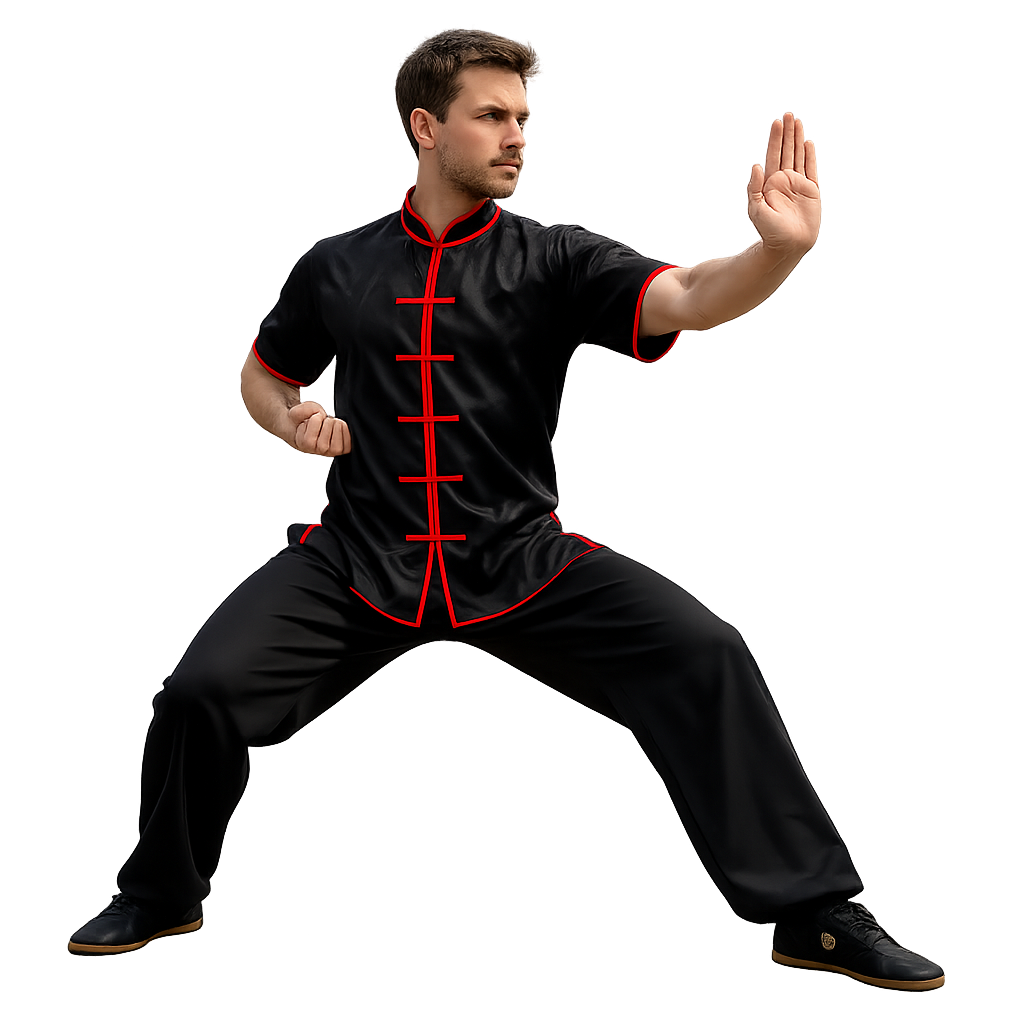
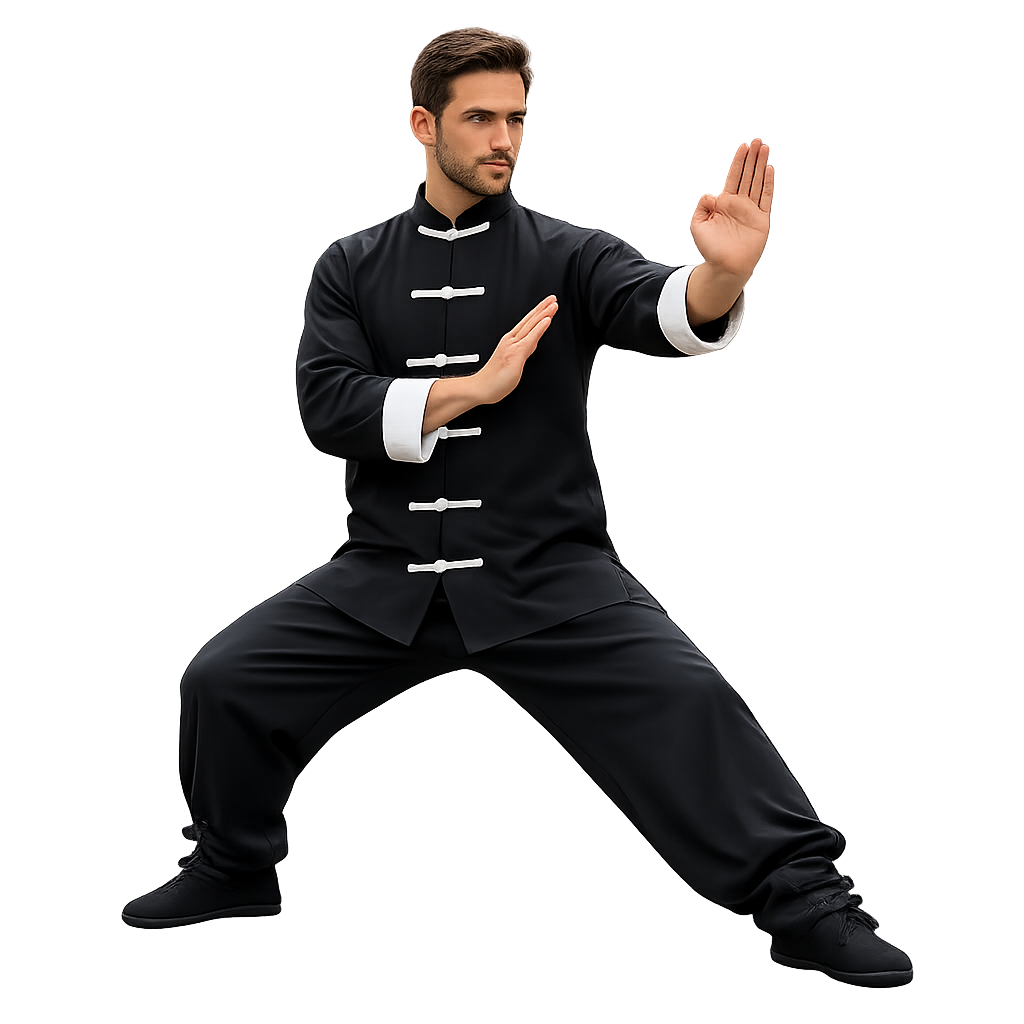
Train with confidence and tradition in our custom Hung Gar Kung Fu Uniform, designed to support powerful stances, dynamic movement, and timeless martial aesthetics. This set includes a black kung fu shirt with crisp white trim, paired with matching black kung fu pants—crafted for both performance and visual impact.
The shirt features a classic Mandarin collar and traditional frog buttons (Pankou knots), honoring authentic Chinese martial arts design. Its cut allows unrestricted arm mobility, making it ideal for the strong, grounded techniques of Hung Gar. Choose between long sleeves, short sleeves, or a sleeveless variation to suit your training style and environment. Open cuffs ensure comfort and fluidity during forms and drills.
The pants are engineered for deep stances and explosive transitions, with a reinforced crotch inset that enables full range of motion—even in the lowest horse stance. You can customize your fit and functionality with options for elastic or open leg openings, as well as inside, outside, or no pockets depending on your preference.
This example features our Silky Black Dragon fabric with white trim, offering a smooth texture and elegant sheen. However, every uniform is fully customizable—from fabric type and weight (cotton, linen, and blends) to color combinations, trim placement, and button configuration. Popular choices include black with white trim, white with black trim, or bold red and black combinations, often used in demonstrations and school settings. If you are part of a school or lineage, we recommend confirming uniform requirements before ordering.
Each piece is made to support your practice, reflect your style, and carry forward the spirit of traditional hung gar kung fu.
Turnaround time: 10 - 15 business days